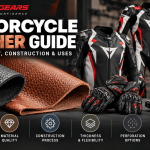
Motorcycle Leather Guide: Types, Quality, Construction & Uses
Motorcycle leather is chosen for more than its appearance. The type of leather, tanning, hide selection, thickness, flexibility, stitching, perforation and finishing all influence how a leather garment feels and performs.
This guide explains motorcycle leather types, material quality, garment construction, common uses and what to consider when buying or customizing leather gear.
Quick Answer: What Is Motorcycle Leather?
Motorcycle leather is leather selected and manufactured for motorcycle apparel rather than ordinary fashion garments. Its characteristics depend on hide selection, tanning, thickness, panel construction, stitching, flexibility and finishing.
Where Is Motorcycle Leather Used?
Leather is used across several motorcycle apparel categories. Each garment has its own pattern, panel arrangement and finishing requirements, even when similar leather materials are used.
01 · JACKETS
Leather Motorcycle Jackets
Leather jackets range from classic biker styles to sport-oriented designs. Their appearance and feel depend on leather selection, cut, panel construction and finishing.
02 · ONE-PIECE
One-Piece Leather Racing Suits
One-piece leather suits combine multiple panels into a single garment. Pattern design, stretch sections, seams and finishing contribute to the finished fit and feel.
03 · TWO-PIECE
Two-Piece Leather Racing Suits
Two-piece leather suits use separate jackets and pants designed to work together. Their leather panels, closures and finishing are adapted to the individual pieces.
04 · GLOVES
Leather Motorcycle Gloves
Glove leather is shaped around the palm, fingers and wrist. Flexibility, surface feel and precise panel construction are important material considerations.
05 · BOOTS
Leather Motorcycle Boots
Leather is also used in motorcycle riding footwear, including racing boots. Its shape, panel construction and finishing differ from those used in jackets and suits.
Types of Leather Used in Motorcycle Gear
Cowhide and kangaroo leather are two materials used in motorcycle apparel. They have different characteristics, and the appropriate choice depends on the garment, desired feel and product specification.
Cowhide Leather
Cowhide is widely used for motorcycle apparel because of its availability, structure and manufacturing versatility. It can be used in jackets, racing suits, gloves and other garments, depending on the design.
Consider: structure, thickness, grain and finish.
Kangaroo Leather
Kangaroo leather is often selected for a lighter and more supple feel. Its characteristics differ from cowhide, and suitability depends on the material specification and the finished garment.
Consider: weight, flexibility and product availability.
Cowhide vs Kangaroo Leather
| Factor | Cowhide | Kangaroo |
|---|---|---|
| Feel | Often substantial and structured. | Often lighter and more supple. |
| Weight | Depends on the hide and construction. | Can support a lighter construction. |
| Availability | Widely used and available. | More specialized. |
| Typical use | Jackets, suits and other apparel. | Selected performance-oriented garments. |
Buyer Tip
Do not choose leather only because one material sounds more premium. Compare its actual specification, feel, finishing and construction before deciding.
What Makes Motorcycle Leather High Quality?
Leather quality begins with material selection and continues through tanning, cutting, assembly and finishing. Looking at these stages helps buyers understand why two leather garments can differ considerably in appearance and feel.
01. Hide Selection
Grain appearance, surface condition and material consistency influence the selection of leather for individual garment panels.
02. Tanning
Tanning prepares hides for leather production. The process and subsequent finishing contribute to the characteristics of the final material.
03. Thickness
Thickness affects structure and feel, but should be considered alongside leather type and construction.
04. Grain and Finish
Grain and finishing influence leather appearance, texture and consistency across a finished garment.
Motorcycle Leather Thickness: What Buyers Should Know
Is Thicker Leather Always Better?
Not necessarily. Thickness is one material specification, but leather quality also depends on hide selection, tanning, flexibility, finishing and how the material is assembled into the finished garment.
Selected MotoGP Gears leather-suit listings specify genuine cowhide leather in the 1.2–1.3 mm range. This specification applies to the relevant listed products and should not be treated as a universal thickness for all motorcycle leather garments.
When comparing products, review the complete leather specification rather than relying on thickness alone.
| Detail | Why It Matters |
|---|---|
| Leather type | Identifies the material and its characteristics. |
| Thickness | Provides information about material dimensions and feel. |
| Flexibility | Helps buyers understand how the material feels. |
| Finishing | Influences appearance, texture and surface feel. |
How Motorcycle Leather Is Constructed
Leather garments are created through a series of manufacturing stages. Pattern making, panel cutting, stitching, stretch-material integration and finishing help turn leather into a completed motorcycle garment.
01. Pattern Development
Patterns define the shape, dimensions and arrangement of the garment's individual panels.
02. Leather Cutting
Leather is cut into the required pieces according to the selected garment pattern.
03. Panel Assembly
Individual leather panels are assembled to create the garment's overall shape.
04. Stretch Materials
Flexible materials can be integrated into selected areas to accommodate garment movement.
05. Stitching
Leather panels are joined through the seams and stitching specified for the garment.
06. Finishing
Zippers, linings, cuffs, collars, perforation and other selected details are completed.
Stretch Materials
MotoGP Gears identifies Schoeller KEPROTEC among the technical stretch materials referenced in its published materials information. Availability and placement may vary by garment.
Threads and Seams
Stitching is an important part of leather garment construction. MotoGP Gears' published materials information describes technical threads and double or triple security seams in its tailoring information.
Zippers, Linings and Finishing
Details such as zippers, linings, cuffs and collars contribute to the finished garment. MotoGP Gears identifies YKK zippers in its materials information; individual product features may vary.
Perforated Motorcycle Leather
Why Is Motorcycle Leather Perforated?
Perforation creates small openings in selected leather panels to allow air to move through the garment. The amount and placement depend on the product design and rider preferences.
MotoGP Gears offers perforation choices on selected leather-suit products, including front, back, full or no perforation. Check the individual product page for available configurations.
| Option | Description |
|---|---|
| No perforation | Solid leather panels without added perforation. |
| Front perforation | Openings concentrated in front panels. |
| Back perforation | Openings concentrated in rear panels. |
| Full perforation | Perforations across larger selected areas. |
How Leather Changes by Garment Type
Leather is shaped differently according to the product being manufactured. Jackets, racing suits, gloves and boots have different patterns and finishing requirements.
Leather Motorcycle Jackets
Jacket leather is used in classic biker silhouettes, sport-oriented designs and personalized garments. Patterning, material choice and finishing influence the overall look and feel.
Leather Motorcycle Suits
Leather suits use multiple panels joined to create a complete garment. Pattern, stretch sections, stitching and finishing contribute to the final fit and appearance.
Leather Motorcycle Gloves
Glove leather is shaped around the palm, fingers and wrist. Flexibility, softness and precise panel construction are important when evaluating the material.
Leather Motorcycle Boots
Leather footwear uses different patterns and finishing from jackets and suits. Its shape and construction are adapted to the foot and the intended boot design.
Custom Motorcycle Leather
Why Choose Custom Leather Gear?
Custom motorcycle leather can be useful when a rider wants an individualized fit, specific colors, personalized graphics, a particular material or a garment developed around personal measurements.
Customization can involve more than changing a garment's appearance. Depending on the product, it may include measurements, pattern development, leather selection, perforation, lining and other construction details.
Material Choice
Selected products offer cowhide or kangaroo leather options.
Made-to-Measure Fit
Custom sizing allows selected garments to be developed around supplied measurements.
Personalized Design
Selected products support colors, names, numbers, logos and graphics.
Garment Configuration
Selected products provide choices around perforation and other garment details.
Learn more about how custom gear works and why tailor-made gear may suit your requirements.
Looking for Custom Motorcycle Leather?
Explore available MotoGP Gears options for leather selection, personalized designs and made-to-measure sizing.
How to Choose Motorcycle Leather Before Buying
Start with the leather type and then compare the material specification, construction, garment type and customization options. This provides a clearer basis for comparing products.
01. Choose the Leather Type
Consider whether cowhide or a lighter, more supple material such as kangaroo better matches your preferences.
02. Check the Specification
Review the stated leather type, thickness, perforation and available material details for the exact product.
03. Look at Construction
Consider the panel arrangement, stitching, stretch materials, zippers, lining and finishing.
04. Select the Garment
Decide whether you need a leather jacket, one-piece suit, two-piece suit, gloves or boots.
05. Consider Perforation
Select the available configuration according to the climate, preferred airflow and garment design.
06. Decide on Customization
Custom options may be useful when you want personalized measurements, colors, graphics or other selected details.
Motorcycle Leather Care and Maintenance
How Should Motorcycle Leather Be Maintained?
Follow the manufacturer's care instructions for the specific garment. Store leather in a dry, ventilated place, avoid unnecessary direct heat and inspect it regularly for visible wear or deterioration.
Store It Properly
Keep leather in a clean, dry and ventilated environment.
Avoid Direct Heat
If leather becomes wet, allow it to dry naturally instead of applying strong direct heat.
Follow Care Instructions
Different finishes and linings may require different cleaning methods.
Inspect the Leather
Check the surface, seams and zippers for visible signs of wear.
Common Motorcycle Leather Buying Mistakes
Buying Only by Appearance
An attractive design does not tell you the leather type, thickness, finishing or construction details.
Buying Only by Thickness
Thickness is useful information, but it should be considered alongside leather type, quality and construction.
Ignoring Leather Type
Cowhide and kangaroo leather can have different characteristics, so the choice should be deliberate.
Ignoring Garment Construction
Pattern design, seams, stretch panels and finishing influence the completed garment.
Choosing Perforation Without Considering Climate
Select perforation according to the preferred airflow, intended use and available product configuration.
Assuming Customization Means Only Graphics
Depending on the product, customization can include measurements, material selection, perforation, colors and other garment details.
MotoGP Gears Leather Materials and Manufacturing
MotoGP Gears publishes information about the materials used in its motorcycle apparel. The company identifies bovine leather as its main leather material and offers kangaroo leather for selected products.
Its published materials information also identifies Schoeller KEPROTEC for selected stretch areas, technical threads and YKK zippers. These details illustrate how leather selection works together with pattern development, stitching, flexible panels and finishing.
Read more on the MotoGP Gears Materials page and the Manufacturing Process page.
Which Motorcycle Leather Should You Choose?
| Your Priority | Option to Consider | What to Check |
|---|---|---|
| Substantial leather feel | Cowhide | Hide quality, thickness and finish. |
| Lighter, supple feel | Kangaroo leather | Material specification and construction. |
| More airflow | Perforated leather | Available perforation configuration. |
| Personalized fit | Custom leather garment | Accurate measurements and pattern development. |
| Personalized appearance | Custom leather design | Colors, graphics, names and numbers. |
A SIMPLE BUYING FORMULA
Leather Type + Construction + Fit + Configuration
Start with the leather you prefer, then evaluate how it is cut, stitched and finished. Consider garment sizing, perforation and customization options. This provides a more useful comparison than looking at the leather label alone.
EXPLORE MOTOGP GEARS COLLECTIONS
Find Your Motorcycle Leather Gear
Explore the available motorcycle apparel categories to compare styles, materials and product options.
Frequently Asked Questions About Motorcycle Leather
1. What Is Motorcycle Leather?
Motorcycle leather is leather selected and manufactured for motorcycle apparel. Its characteristics depend on hide selection, tanning, thickness, flexibility, construction and finishing.
2. What Leather Is Best for Motorcycle Gear?
There is no single best option for every rider. Cowhide is widely used, while kangaroo leather is often selected for its lighter and more supple feel. The right choice depends on the product and rider preferences.
3. Is Cowhide Better Than Kangaroo Leather?
Neither material is automatically better in every situation. Cowhide is widely available and often substantial, while kangaroo leather is often valued for its lighter, supple feel.
4. Is Thicker Motorcycle Leather Better?
Thickness is one useful specification, but leather quality also depends on hide selection, tanning, flexibility, finishing and construction.
5. What Is the Difference Between Motorcycle Leather and Regular Leather?
Motorcycle leather is used in riding apparel, where the finished garment's pattern, panel construction, stitching, flexibility and finishing are important considerations.
6. Where Is Motorcycle Leather Used?
Motorcycle leather is commonly used in jackets, one-piece racing suits, two-piece suits, gloves and riding boots.
7. What Is Perforated Motorcycle Leather?
Perforated leather contains small openings in selected panels to allow more air to move through the garment.
8. Can Motorcycle Leather Be Custom Made?
Selected MotoGP Gears products support customization such as made-to-measure sizing, leather options, colors, graphics and personalized details.
9. How Should Motorcycle Leather Be Maintained?
Follow the manufacturer's care instructions, avoid unnecessary direct heat, store the garment in a dry and ventilated place, and inspect it regularly.
10. Does MotoGP Gears Use Cowhide Leather?
MotoGP Gears identifies bovine leather as its main leather material and offers kangaroo leather for selected products. Check the individual product page for its exact material specification.
Final Takeaway
Motorcycle leather should be evaluated by its type, hide quality, tanning, thickness, flexibility, stitching, perforation, lining and finishing. Understanding these details makes it easier to compare leather garments and select the material and design that match your preferences.
Explore Motorcycle Leather Gear
Discover MotoGP Gears leather jackets, racing suits, gloves, boots and custom leather options.
Brand: MOTOGP GEARS LLC. Product-specific material specifications and customization options should be confirmed on the relevant product page.
Write a Review
Latest Posts